
What It Takes to Be a Synchronized Swimmer
Synchronized swimming, also known as artistic swimming, is more than just gliding through water. It’s a blend of sport, dance, and art. But what does it really take to shine in this unique discipline?
Let’s explore the essential qualities and skills needed to become an outstanding synchronized swimmer.
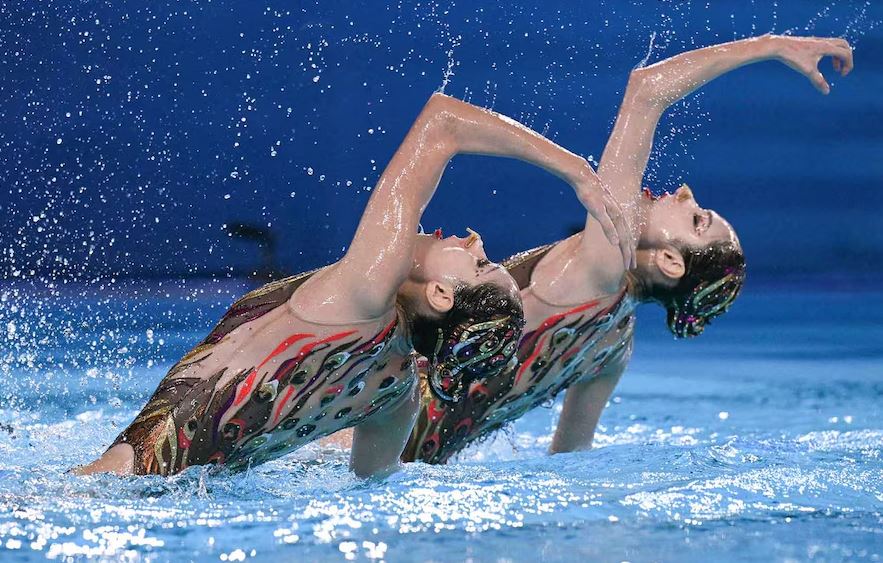
Mastering Basics Skills
- Breath control
- Buoyancy
- Coordination of Movements
- Endurance and Flexibility
Before you can even think about fancy routines, you must first master the basics. Strong swimming skills are non-negotiable. You’ve got to be comfortable in the water, able to hold your breath, and execute various strokes efficiently.
Good body control is key—think about how a dancer moves gracefully across the stage; that’s the kind of finesse needed in sync swimming, too.
Beyond swimming, flexibility plays a huge role. Just like a pretzel, you need to be able to twist and turn your body into all sorts of shapes. If you’re not flexible, you’ll struggle with the artistic side of the sport.
You Must Be A Team Player
Imagine performing a beautiful dance, but instead of music, you’re in water with up to ten others, all moving as one. That’s synchronized swimming! It’s not just about individual talent; it’s about working as a cohesive unit. Check out this video clip of team work
Teamwork is vital. You need to develop trust and understanding among team members. You must know when to lead, when to follow, and how to communicate without words.
Think of it like a well-rehearsed play. Each person has a role, and when everyone knows their part, magic happens.
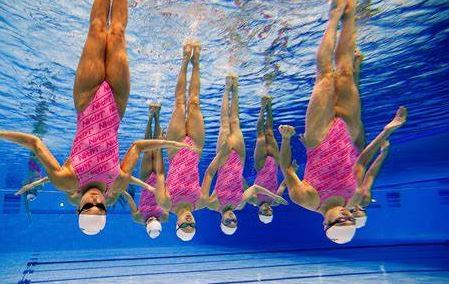
Timing is Everything
In synchronized swimming, timing is as crucial as rhythm in music. You could have the best individual skills, but if your movements don’t match your teammates, it’ll fall flat.
Practicing counts and movements repeatedly helps establish this timing. It’s like learning to ride a bike—at first, it seems tricky, but soon it clicks, and you just flow.
Synchronizing movements creates an eye-catching visual. Imagine a flock of birds flying together; they’re not just flapping their wings randomly. They’re in sync, creating a stunning sight!
Endurance and Strength
Synchronized swimming is not for the faint of heart. You’re contorting your body while treading water, all while performing intricate choreography. That demands a lot of energy. Building endurance is crucial. Regular workouts focusing on cardio and strength training will help you boost your stamina. This is a great swim workout.
Consider it like running a marathon, but in water. You need to be fit enough to keep performing at a high level without tiring out, and this takes dedication.
Creativity and Expression
Artistic swimming is not just about precision; it’s about storytelling. Routines should express emotions and ideas. You’ll need to channel your inner artist, thinking about themes, music, and movements that capture the audience’s attention.
It’s like painting a picture with your body. Each stroke—every splash—adds to the overall image you’re creating. So let your imagination run wild and bring your personality to the pool!
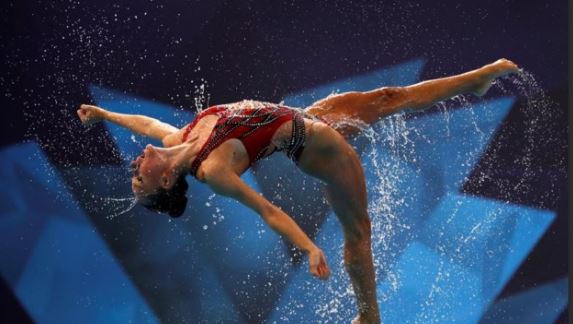
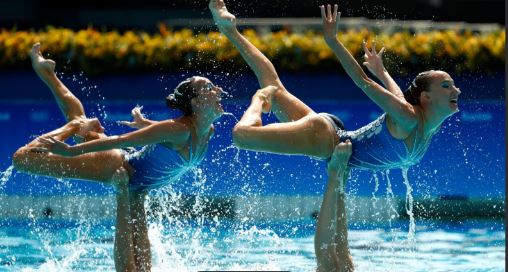
Commitment and Dedication
Finally, let’s talk about commitment. Becoming a synchronized swimmer requires countless hours of practice and unwavering dedication. It’s not just a hobby; it’s a lifestyle. You’ll be attending practices, competitions, and regular training sessions while often juggling school or work.
Think of it like training for a big show. You need to prepare, rehearse, and perfect your routine until it becomes second nature. The more time you invest, the better you’ll get.
Basic Artistic Swimming Positions
1. On the back
The swimmer is in a horizontal position on the surface of the water, the torso is stretched out, the pelvis must be held as high as possible, the legs are together and stretched. The face is directed upwards. The muscles of the back and abdomen are tense. The hands are located at the hips or behind the head.
2. On the chest
The synchronized swimmer is in a horizontal position on the surface of the water face down, legs together, pulled back. The face may be slightly raised or lowered into the water. The arms are located at the hips or stretched forward.
Besides these starting positions, there are other combinations of poses. Mastering them is the knowledge and application of the basics of technical training.
3. On the side
The athlete’s body is completely on the side, slightly bent in the lumbar. The face is above the water, hips are at the surface. Performing supporting strokes, the arms are arranged as follows: the upper one at the hip, the lower one is stretched out behind the head parallel to the surface of the water.
4. The leg is bent at the knee
This position is performed on the back or on the chest. The hands perform supporting strokes at the hips. One leg is bent at the knee and pressed with the thumb of the foot to the inside of the outstretched leg.
5. On the chest, bending the knee
The body is bent at the waist. One leg is straight, the other is bent at the knee, the foot is pressed against the straightened leg..
6. Angle up
Lying on the back, both legs are raised vertically upwards. Hips — as high as possible to the surface of the water.
7. Angle up in the dive
The body is submerged parallel to the surface of the water. The torso is straightened. One leg is straight, the other is raised vertically up the water level — at the ankle.
8. Angle up with both feet in the dive
The body is submerged parallel to the surface of the water. Both legs are raised up perpendicular to the surface.
9. Flamingo
The athlete lies on the back, slightly at an angle to the surface, with the face looking up. One leg (near the water surface) is bent at the knee and hip joints, the other is stretched perpendicular upwards. Hands at the hips perform strokes.
10. Grouping
In the back position, the legs are bent at the hip and knee joints and pulled as close to the chest as possible. The shins and outstretched feet are on the surface.
Bottom Line
So, what does it take to be a synchronized swimmer? It’s a blend of talent, teamwork, endurance, creativity, and an unwavering commitment to the craft. It’s about finding beauty in movement and expressing it with others. This is a stunning performance by Team Greece!
So if you’re ready to dive in, embrace the challenges, and flow with the rhythm, the world of synchronized swimming awaits YOU!
Pingback: Synchronous sisters De Brouwer (26) end career: 'The story is finished' - World Today News
Pingback: แฟรนไชส์หม่าล่าทั่ง
Pingback: บริษัทรับสร้างบ้าน
Pingback: ถังน้ำตราบ้าน
Jilibetweb looks like the classic website. Hopefully, it’s mobile-friendly! I can’t always be on my computer. Gotta be able to play wherever! Check it out here: jilibetweb
Heard some buzz about s92game. Gonna give it a look. Hoping to find some hidden gems! s92game
Alright, alright, phil168vip… I see you. Seems like a decent VIP option. Gonna need to dive a little deeper to see what’s what, but it’s got my attention. Anyone else tried it out? Let me know what you think! phil168vip
Solid article! Thinking about bankroll management is HUGE in tournaments – it’s not just about skill. Seeing platforms like jlboss games com offer easy deposit options (like GCash!) makes getting in the game simpler, too. Definitely a factor for volume players!
Pingback: ทำนายสกอร์
Pingback: fear of god essentials
Win99? Yeah, I downloaded a few games there. Pretty slick setup. Fast downloads too! Worth trying taigamewin99.
AU8803, never heard of ’em before. But hey, gotta try new things, right? Website seems straightforward enough. Gonna drop some dough and see what happens. Stay tuned! au8803
Looking for a new lottery site and 92 lottery.net popped up. Decent platform? Tell me your experiences after visiting 92 lottery.net.
Pingback: โคมไฟ
Pingback: kazinoruletkaonlayn.kz
Pingback: ชุดเครื่องเสียง
Pingback: 123bet login
Alright lads, anyone else been digging into ‘keonhacai55 fit’ over at keonhacai55bet.com? Seems like they’re really focused on the fitness bets. Planning to drop some cash on those upcoming tournaments. Give them a whirl: keonhacai55 fit
Just trying out mm88london and it’s honestly quite promising. It’s got a slick design and seems trustworthy enough. Worth a try for sure mm88london!
Heard some good things about q888bet and decided to check it out myself. Not disappointed. The experience is pretty good all around. Check it out q888bet!
Need a good aggregator for football bets? 1gomcombong88 is my go-to. They have a wide range of options and the interface is straightforward. Keeps my betting organized. Explore your options with 1gomcombong88
Fun88cbtc chegou pra botar ordem na casa! As odds são as melhores que já vi, e a plataforma é super fácil de usar. Pra quem curte apostar com cripto, é a melhor opção, na moral! Corre lá no fun88cbtc.
Quem aí curte um bom caça-níquel? O mm99slot é o paraíso pra quem gosta de slot! Tem tanta opção que fico até perdido! E o melhor de tudo é que sempre rola umas rodadas grátis no mm99slot.
Pingback: หาแม่บ้าน
Pingback: HILO789
Pingback: ข่าวพรีเมียร์ลีกล่าสุด