
The Best Swim Lesson for Toddler and Baby
Are you ready to start a swim journey with your little one? Swim lessons taught by professionals are always best but there are also some things you can do to ease your toddler and baby into the world of swimming.
Teaching your toddler and baby to swim is not only a fantastic way to bond but also an essential life skill that will keep them safe and confident around water.
In This Article
- The Benefits of Toddler and Baby Swim
- What to Expect from Swim Lessons
- The Swim Lesson
- A Few Tips from Swim Coach Veronica
- Bottom Line
The Benefits of Toddler and Baby Swim
The number one benefit of introducing your baby to swimming is confidence and enjoyment for both you and your baby. Babies who start swimming early tend to be less fearful of the water as they grow older and learn to be independent swimmers.
And isn’t it fun to wake up on a Saturday morning and head to the pool with your baby to enjoy singing, splashing, and a community of other parents?
Another fantastic benefit is physical growth and strength building. Swimming helps build muscle strength and improves coordination and balance.
Water safety is always a huge concern for parents and early swim lessons can reduce the risk of drowning, especially in children over the age of one. According to the CDC, there are some 3,536 drowning-related deaths annually, about one in five of which are children 14 and younger. Being comfortable in the water through swim lessons is a crucial first step towards water safety.
Finally, better appetite and sleep are bonus benefits of the exercise and stimulation swim lessons offer. My babies would always fall asleep as soon as they were dressed and placed in their car seats after a swim lesson.
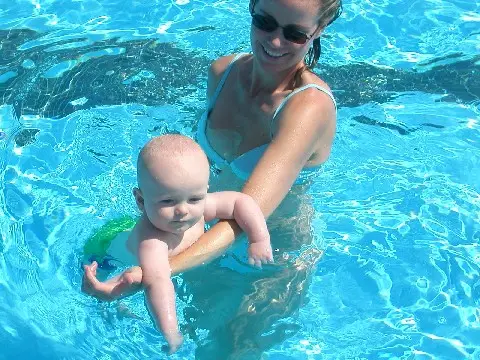
What to Expect from Swim Lessons
It is important that you make your child’s first exposure to swimming pleasant. Look for pools that offer quiet and calm toddler and baby swim lessons and warm temperature water, about 85 F.
Make sure the instructor is certified to teach young children as well as being CPR, AED, and First Aid trained and certified.
There are several kinds of toddler and baby swim lessons but the most common are Safety Swim, focused on water safety; Fun Swim, focused on play and music in the water; and Serious Swim, a combination of both.
Most likely a typical swim lesson will comprise of Warm-Up Fun: Gentle splashing and water play to get comfortable. Floating Adventures: Learning to float and kick with the help of fun pool toys. Skill Time: Various leg, arm and body swim techniques for young children. Game Time: End the lesson with water games that reinforce skills and hopefully brings lots of smiles and laughter.
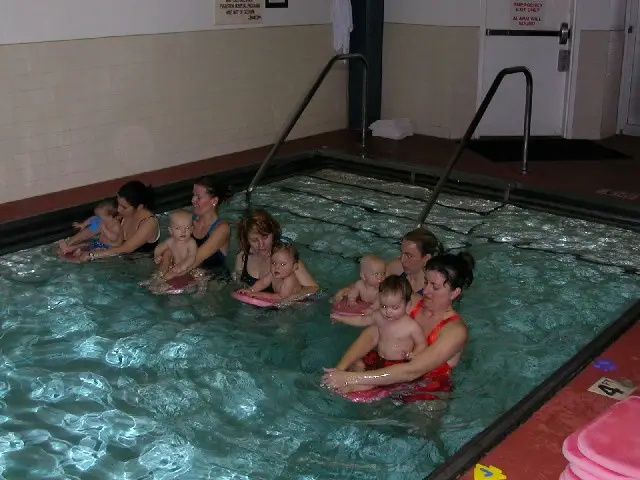
The 30-Minute Swim Lesson
1. Warm-Up (5 minutes)
- Activity: Gentle splashing and water play.
- Objective: Help toddlers get comfortable in the water.
- Equipment: Pool toys (floating toys).
2. Basic Skills (10 minutes)
- Activity: Blowing bubbles and face immersion.
- Objective: Encourage toddlers to put their faces in the water and blow bubbles.
- Equipment: None needed.
3. Floating and Kicking (10 minutes)
- Activity: Assisted back floats and kicking exercises.
- Objective: Teach basic floating and kicking techniques.
- Equipment: Kickboards or pool noodles.
4. Fun and Games (5 minutes)
- Activity: Water games like “Ring Around the Rosie” or retrieving toys.
- Objective: Make learning fun and reinforce skills.
- Equipment: Pool toys or rings.
Tips for Success:
- Safety First: Always ensure close supervision and never leave child alone or unwatched
- Positive Reinforcement: Praise and encourage toddler and baby to build their confidence.
- Adaptability: Be flexible and adjust activities based on the child’s comfort and skill level.
A Few Tips from Swim Coach Veronica
- Wait for the right time for you and your baby to take swim lessons
- Skip floaties and teach safety and skills first. Floaties are not a safety tool
- Always supervise your child. It only takes seconds an inch of water for drownings to occur
- Never surprise your baby by ducking them under the water. Always tell them what you’re doing regardless of age
- Choose clean facilities and warm water for babies, around 85 F
- Seek out qualified and properly certified instructors with a good “bedside” manner
- Learn infant CPR either by certification or by watching YouTube
- Above all, enjoy these precious baby years with your little one
- Find more specifics on baby swim in this article
Bottom Line
Why is swimming awesome for toddlers and babies? First, it boosts their confidence. Just watch your little one beam with pride as they conquer new skills. Second, it strengthens their physical development. Finally, it enforces tremendous safety skills in the water.
Remember, the key to a successful swim lesson is patience, encouragement, and plenty of praise. So, grab your swimsuits and just dive in!
Pingback: ดูหนังออนไลน์ฟรี
Pingback: clothing manufacturer
Great article! Finding a platform that prioritizes both fun and security is key. I’ve been checking out jlboss app – the easy signup & KYC process is a nice touch. Definitely worth a look for legit gaming! 👍
Pingback: เสริมจมูกที่จีน
Was chatting with my buddy about finding a good way to watch the MMA fights, and he mentioned selcuksportshd24. Said the quality was decent. I’ll give it a shot I guess. selcuksportshd24
I’ve been playing zv777game for a few days now and I’m really enjoying it. A nice mix of classic and modern games, with new ones added frequently it seems. Solid choice! zv777game
What’s up? Been trying out j1900 lately. I can say it’s not bad at all. So give it a shot and click this: j1900
Solid article! Understanding opponent tendencies is key, especially in tournaments. Seeing platforms like jlboss games slot download expand options is interesting – more players mean tougher competition! Gotta stay sharp.
Pingback: เว็บตรงฝากถอนง่าย
Yo, getting into Jiliok Casino is a breeze! The login process is stupid simple. Just remember your credentials and you’re golden. They’ve got a decent selection of Jili games so if you’re a fan, it’s worth a peek. Log in here: jiliokcasinologin
Pingback: suzuran168
Pingback: ขอขึ้นทะเบียน อย
Pingback: webslot
Check out D247Login for what seems typical. Quick and straightforward login, the basics are covered. Not a rave but acceptable. Have a try: d247login
Just tried out F8betlgoptimusl9 and it’s pretty decent. Easy to navigate and the bonuses are a nice touch. Take a look and see if its your cup of tea. f8betlgoptimusl9
Pingback: โคมไฟ
Pingback: บุหรี่นอกราคาถูก
Heard some buzz about jili711. Gonna try it out and see if I can hit the jackpot. Let’s do this! I am pumped so see this jili711!
Yo, check out superjiliapp! Heard it’s the real deal for gaming on the go. Gonna give it a shot tonight, wish me luck!
Yo, anyone had any luck at 50jilicasino? Heard they got some decent slots. Might drop in for a quick session later.
Pingback: essentials
Pingback: Ethical Elephant Sanctuary
Pingback: ไซด์ไลน์
Pingback: 789wing
Understanding slot game odds is key, and quick registration-like with the jl boss app-makes jumping in easier! Secure verification is smart too; builds trust for a fun experience. It’s all about informed play!