
A Parent's Guide to Baby's First Swim
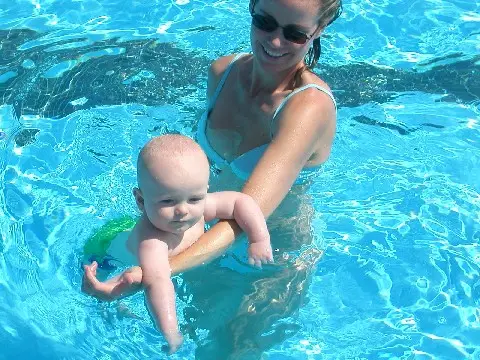
One of my favorite age groups to teach swimming is babies! When we’re in the pool, their natural curiosity draws them toward the water which they want to explore in all kinds of fun ways. All their five senses are used!
Swimming is not only a delightful and enriching activity for babies but it’s also a vital life skill and brings numerous benefits, both for their physical and cognitive growth.
Let’s explore the advantages of infant swim.
In this Article
- Benefits of Baby Swim
- What Age should Baby start Swim Lessons
- Types of Swim Lessons
- A few tips from Swim Coach Veronica
- Bottom Line
Benefits of Baby Swim
The number one benefit of introducing your baby to swimming is confidence and enjoyment for both you and your baby. Babies who start swimming early tend to be less fearful of the water as they grow older and learn to be independent swimmers.
And isn’t it fun to wake up on a Saturday morning and head to the pool with your baby to enjoy singing, splashing, and a community of other parents?
Another fantastic benefit is physical growth and strength building. Swimming helps build muscle strength and improves coordination and balance.
Water safety is always a huge concern for parents and early swim lessons can reduce the risk of drowning, especially in children over the age of one. According to the CDC, there are some 3,536 drowning-related deaths annually, about one in five of which are children 14 and younger. Being comfortable in the water through swim lessons is a crucial first step towards water safety.
Finally, better appetite and sleep are bonus benefits of the exercise and stimulation swim lessons offer. My babies would always fall asleep as soon as they were dressed and placed in their car seats after a swim lesson.
What Age Should Baby Start Swim Lessons
According to the NHS, ‘You can take your baby swimming at any age.” Babies are born with a remarkable ability to control their breathing in water.
They have a reflex reaction that moves their arms and legs in a swimming motion, called the Bradycardic response. This natural ability commonly disappears after about 6 months.
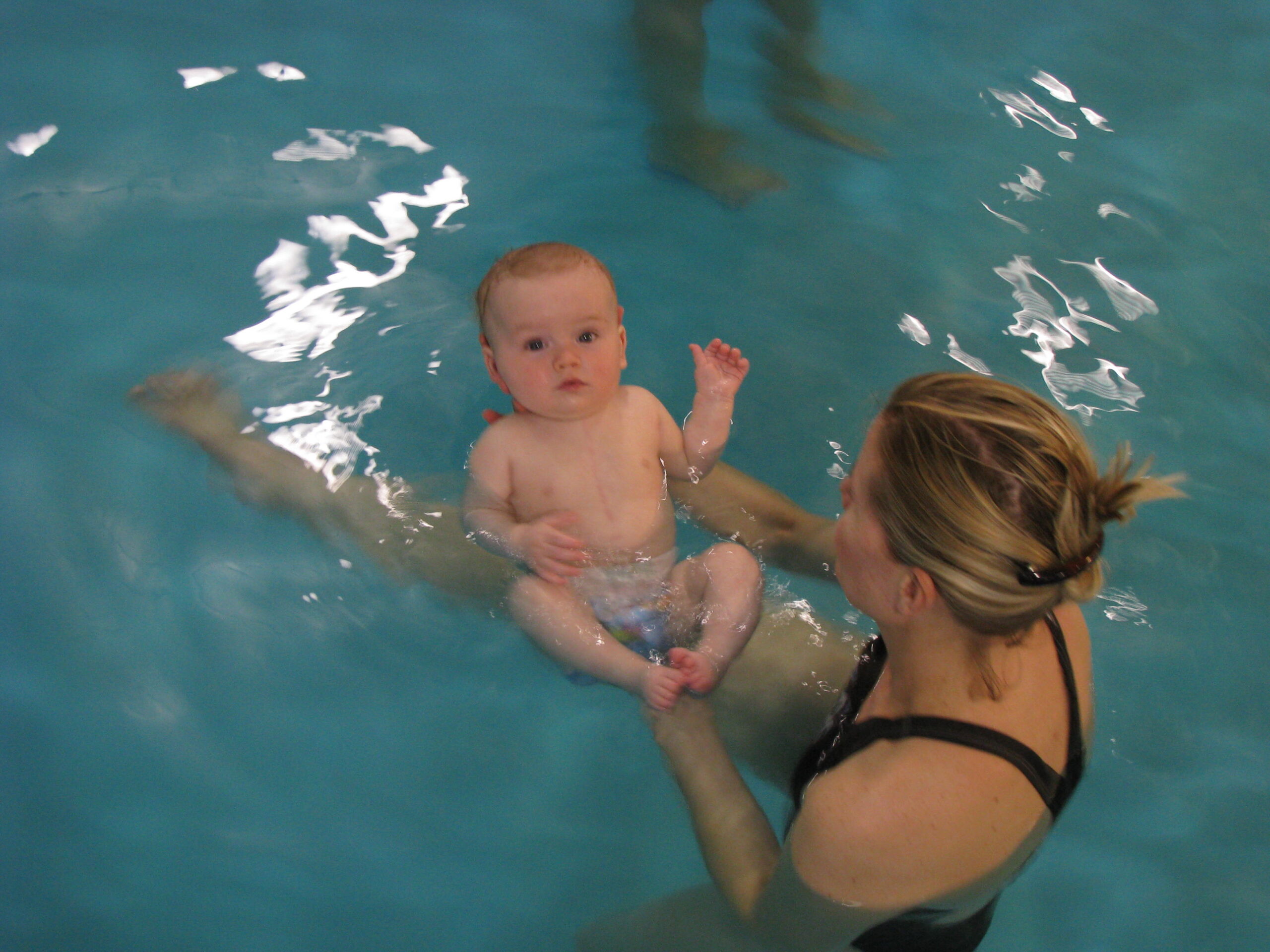
I have three children and they were all in the pool between 6-12 weeks of age. My youngest son was born with six heart defects and had three open heart surgeries before he was two months old. I got him in the pool as soon as his scars were healed and closed up.
The warm water of the therapy pool where I taught was an amazing part of his healing from a traumatic start in life. The soothing and warm water accompanied by music and gentle movement in the water helped both him and I feel normal again after such a long stay in the hospital.
It is also important that you make your baby’s first exposure to a swimming pool or open water pleasant. Indoor water parks are probably not a good choice. Instead, look for pools that offer quiet and calm baby swim lessons.
Types of Swim Lessons
There are three types of swim lessons for babies:
- Safety Swim
- Fun Swim
- Serious Swim
Safety Swim has been around since the 1960s. They teach infants how to roll onto their backs to prevent drowning. The lessons last only about 10 minutes at first and build up to 30 minutes once babies have mastered the skill.
Fun Swim is more of a social outing for both parent and child. It’s a time to bond and interact with other babies and their parents in the water. Swim lessons are usually built around singing and games in the water. These lessons usually take place in heated pools and last no longer than 30 minutes.
Serious Swim are infant and baby swim lessons that combine survival and fun lessons. These are the types of lessons I mostly teach. My goal is for parents and children to have fun in the water but also learn to respect the water by building safety skills early on.
A Few Tips from Swim Coach Veronica
- Wait for the right time for you and your baby to take swim lessons
- Skip floaties and teach safety and skills first. Floaties are not a safety tool
- Always supervise your child. It only takes seconds an inch of water for drownings to occur
- Never surprise your baby by ducking them under the water. Always tell them what you’re doing regardless of age
- Choose clean facilities and warm water for babies, around 85 F
- Seek out qualified and properly certified instructors with a good “bedside” manner
- Learn infant CPR either by certification or by watching YouTube
- Above all, enjoy these precious baby years with your little one
Bottom Line
Baby swim is not only a fun activity for you and your child but it is an investment in their health and safety.
Combining the developmental benefits of swimming, with key safety measures can provide your precious child with a lifetime of enjoyment and respect for the water.
Welcome to the wonderful world of baby swim!
Pingback: ร้านขายเครื่องมือช่าง
Pingback: silicone reborn dolls
Pingback: รับจด อย
Pingback: abfastana.kz
Pingback: 123bet เข้าสู่ระบบ
Pingback: recommended you read
Logging in to mostplaylogin was a breeze, didn’t have any issues. Seems like a good start. Now to explore what they’ve got in store! Give it a whirl: mostplaylogin
Pingback: clothing manufacturer
Want to sign up for SV388? dangkysv388 made the process a breeze. Didn’t have any issues with verification or anything. Fast and easy setup. Check them out: dangkysv388
888win10, huh? Heard some whispers about this place. Been meaning to check ’em out. Anyone had any luck over there? Might be time for a cheeky spin! Check out 888win10.
VN88 coming in clutch with the sweet deals. Been winning some lately! Give it a go nhacaivn88.
KKwinbet! Double the ‘K’, double the win maybe? Who knows! Definitely curious now… what’s their specialty? Good for sports? Casino games? kkwinbet
188betthethao is my go-to for sports betting. Best odds around. Check it now here: 188betthethao
Pingback: เค้กใกล้ฉัน
Pingback: โรงแรมหัวหิน
Pingback: EndoliftX